



Scrying and mirror magic sit in that strange space where reflection stops being just reflection. At its core, scrying is the act of gazing into a surface to receive visions, impressions, or messages. People have used everything from bowls of water to polished obsidian, but mirrors have always held a special kind of unease. There is something about looking into a surface that looks back that makes the experience feel more alive than it should.
Historically, scrying shows up in a lot of places across Western esoteric traditions. One of the most famous figures tied to it is John Dee, who worked with a seer named Edward Kelley to communicate with what they believed were angels. They used a reflective surface to receive these messages, recording entire conversations in what would later be called Enochian magic. Whether you see it as divine contact or psychological projection, the method itself is hard to ignore.
Mirror magic builds on that same idea but leans more into symbolism and ritual. A mirror is not just a tool, it becomes a gateway or a threshold. In many traditions, mirrors are thought to hold energy, reflect the soul, or even trap spirits. This is why you see so many superstitions about covering mirrors after a death or avoiding them during certain rituals. The mirror is treated less like an object and more like a participant.
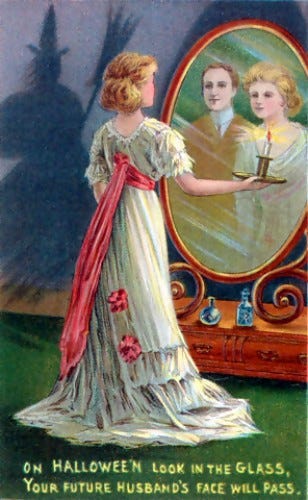

A common form of mirror scrying involves dim lighting, often just a candle or two, and a quiet room. The practitioner stares into the mirror without focusing too hard, letting their gaze soften. Over time, the face in the reflection can seem to shift, distort, or fade. Some people report seeing entirely different faces, landscapes, or shadowy figures. It can feel like the mind is peeling back a layer, revealing something just beneath ordinary perception.
Psychologically, there is a lot going on during scrying. The brain is wired to find patterns and faces, even where none exist. When you stare at a single point for too long, especially in low light, your perception starts to change. This effect can create the illusion of movement or transformation. For some, that explains everything. For others, it just opens the door to the idea that the mind might be acting as a receiver rather than a creator.
In occult practice, intention matters more than the tool itself. A mirror used casually is just glass, but a mirror used in ritual becomes something else. Practitioners often cleanse or dedicate their mirrors, sometimes marking them with symbols or consecrating them under certain planetary alignments. The idea is to turn the mirror into a focused channel rather than a passive surface.
There is also a long standing connection between mirror magic and spirit communication. Some traditions treat mirrors as portals that spirits can pass through or use to manifest. This is where things start to feel a bit darker. Stories of entities appearing in reflections, or of something looking back when nothing should be there, have been around for centuries. Whether folklore or personal experience, these accounts tend to stick with people.
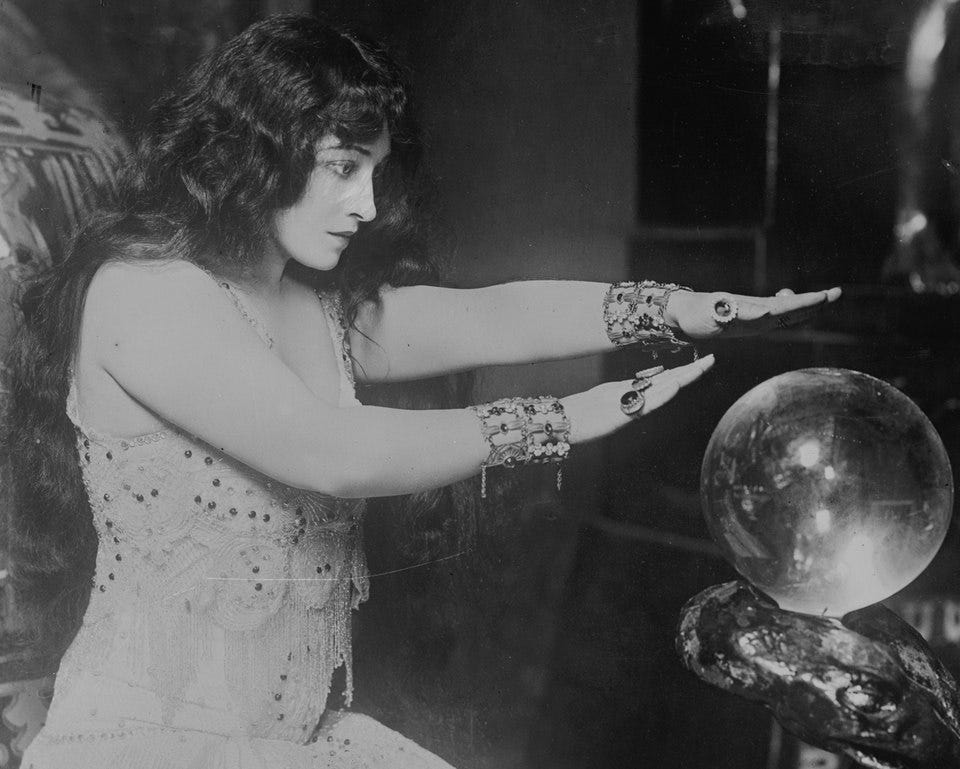
Another layer to mirror magic is its use in self exploration. Instead of trying to contact something external, some practitioners use mirrors to confront their own subconscious. This can tie into ideas explored by Carl Jung, especially the concept of the shadow self. Staring into your own reflection long enough can feel like meeting a version of yourself that you do not normally acknowledge.
Despite how unsettling it can sound, many people approach scrying as a meditative practice. The act of focusing, quieting the mind, and allowing images to arise can be calming in its own way. Even if nothing supernatural happens, the process can reveal thoughts, emotions, or patterns that were not obvious before. In that sense, the mirror becomes a tool for reflection in more ways than one.
In the end, scrying and mirror magic live somewhere between belief and perception. Whether you see it as a mystical practice, a psychological exercise, or something in between, it has a way of pulling people in. Maybe it is curiosity, or maybe it is that subtle feeling that when you stare into a mirror long enough, something might eventually stare back.
Featured image: Young fortune-teller reading the future in a crystal ball. ( Anneka / Shutterstock)
References
Dee, John. The Diaries of John Dee. Edited by Edward Fenton, Day Books, 1998.
Jung, Carl Gustav. Aion: Researches into the Phenomenology of the Self. Translated by R. F. C. Hull, Princeton University Press, 1979.
Jung, Carl Gustav. Man and His Symbols. Doubleday, 1964.
Kelly, Henry Ansgar. The Devil, Demonology, and Witchcraft: Christian Beliefs in Evil Spirits. Wipf and Stock, 2004.
Melton, J. Gordon. Encyclopedia of Occultism and Parapsychology. Gale, 2001.
Peterson, Joseph H., editor. The Lesser Key of Solomon. Weiser Books, 2001.
Regardie, Israel. The Golden Dawn: The Original Account of the Teachings, Rites, and Ceremonies of the Hermetic Order. Llewellyn Publications, 1989.
Rhine, J. B. Extrasensory Perception. Boston Society for Psychic Research, 1934.
Yates, Frances A. The Occult Philosophy in the Elizabethan Age. Routledge, 1979.
Zakia, Richard D. Perception and Imaging: Photography as a Way of Seeing. Focal Press, 2013.