



One of the most fascinating real-life vampire stories centers on a man named Petar Blagojević, whose death in the early 18th century sparked one of the first documented vampire investigations in European history. His case was recorded in official Austrian military reports, distinguishing it from ordinary folklore.
The story takes place in 1725 in the village of Kisiljevo, in what is now Serbia, but then part of the Habsburg Empire. Shortly after Blagojević's death, villagers began reporting strange occurrences. Nine people reportedly fell ill and died within a short period of time, each claiming before death that Blagojević had visited them at night.
According to local accounts, the victims said he would press down on them and strangle them in their sleep. Fear spread rapidly in the village. At a time when disease outbreaks were little understood, such patterns were terrifying and mysterious.
The villagers believed that Blagojević had become a vampire. They petitioned the Austrian authorities to allow his body to be exhumed. Since the area was under imperial administration, an official report was filed rather than simply handling the matter as a matter of superstition.
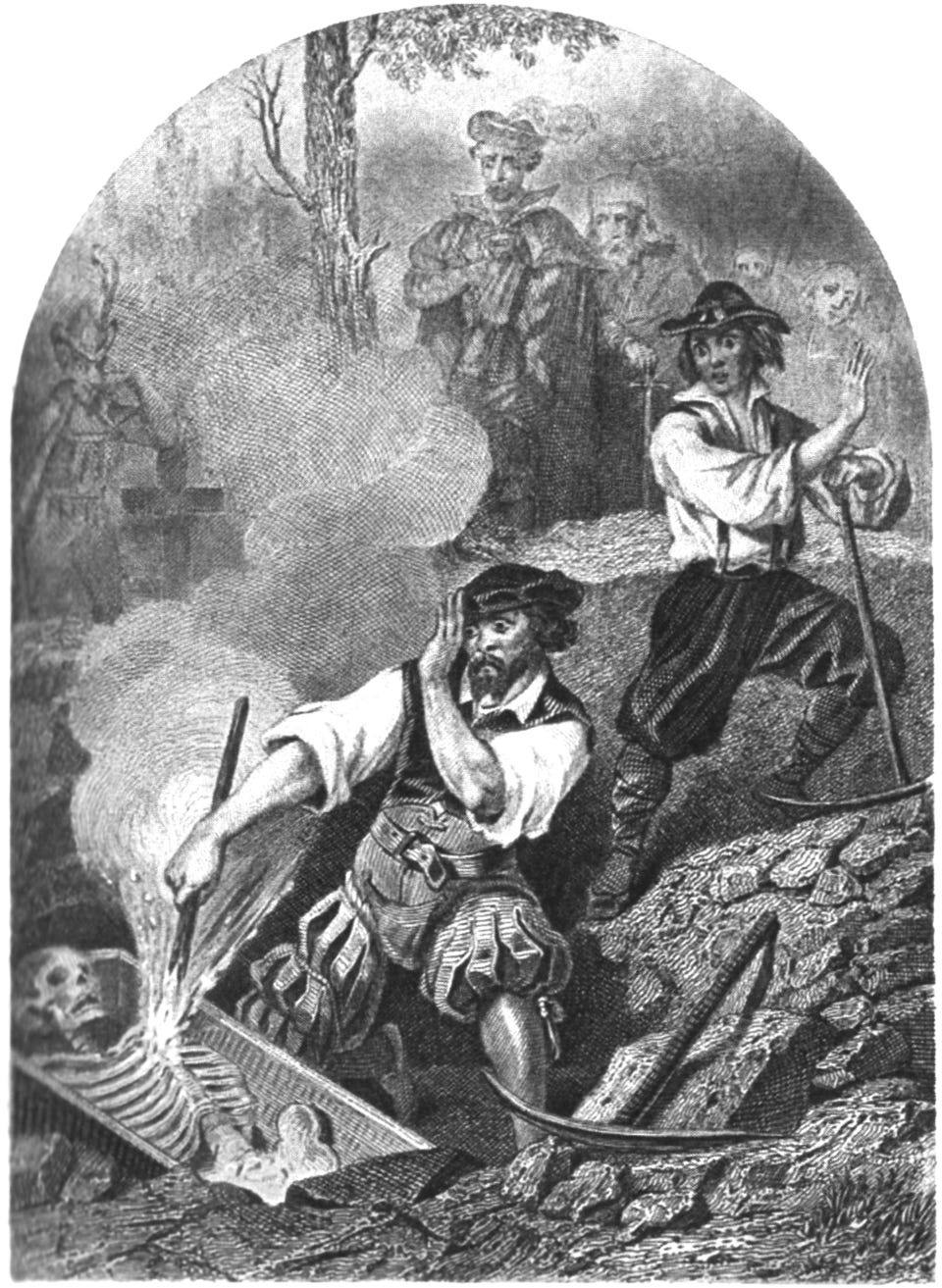

When the grave was opened, witnesses claimed that his body showed little sign of decomposition. They said her skin looked fresh and there was blood on her face. To the villagers, these were sure signs of vampirism.
Modern science offers different explanations. The body may swell due to natural gases, causing blood-like fluid to escape from the mouth and nose. The skin may also appear tight when dry, giving the illusion of new growth. However, these processes were not widely understood at the time.
Believing they have proof, the villagers drive a stake through Blagojević's heart. According to official records, when this was done, fresh blood flowed from his ears and mouth. His body was burnt to ashes to prevent further attacks.
This was not an isolated case. Just a few years later, the story of Arnold Paole came to light in nearby Medveđa. Paole is said to have claimed that he was once attacked by a vampire and had taken measures to protect himself, yet after his death the villagers insisted that he had returned from the grave.
The Paole case became even more widely documented, with military surgeons involved in examining the bodies. Their reports described symptoms similar to alleged vampirism and spread panic throughout the region. These accounts were circulated in European newspapers, leading to the spread of vampire mania.
Western Europe was fascinated. Scholars debated whether vampires were real. Theologians debated the nature of the soul and the dead. The hysteria became so widespread that in 1755, Empress Maria Theresa of Austria sent her personal physician to investigate such claims, eventually discouraging the practice of tying up and burning corpses.
These original investigations helped shape the vampire legend as we know it today. Detailed descriptions of the rituals of dismemberment and burning at the stake influenced later Gothic literature. Decades later, writers would draw on Eastern European folklore when creating fictional vampires.
Although no evidence supports the existence of literal vampires, the cases of Blagojević and Paole make an equally compelling case. They show how fear, disease, limited medical knowledge, and cultural beliefs can combine to create powerful narratives. In the flicker of candlelight on fresh soil, the line between superstition and reality once felt terrifyingly thin.
References
Imperial Austrian Administrative Report (1725) on Petar Blagojević
The Blagojević case was documented by Austrian officials in Kisiljevo and published in the newspaper Wienerisches Diarium in 1725. This is one of the earliest printed reports describing a formal vampire investigation.
Official Military Medical Reports (1732) on Arnold Paole
The Paole case was investigated by Austrian military surgeons in Medveđa. Their findings were compiled in a report commonly referred to as Visum et Repertum in 1732, detailing the exhumations and alleged signs of vampirism.
Dom Augustin Calmet, Traité sur les apparitions des esprits et sur les vampires (1746)
Calmet analyzed contemporary vampire reports from Eastern Europe, including the Serbian cases, and helped spread awareness of them across Western Europe.
Paul Barber, Vampires, Burial, and Death: Folklore and Reality (1988)
Barber provides a modern scholarly analysis explaining how natural decomposition processes likely led to misinterpretations of corpses as vampires.
Montague Summers, The Vampire: His Kith and Kin (1928)
Although more sympathetic to the supernatural angle, Summers collected historical vampire accounts, including Blagojević and Paole.
Rolf Schulte, Vampire Panic in Early Modern Europe (2011)
A modern academic study examining the broader social, political, and medical context of 18th century vampire scares within the Habsburg territories.