


In the late summer of 1977, something unsettling began to stir inside a modest council house on Green Street in Enfield, North London. What started as a few strange knocks in the night soon became one of the most infamous paranormal cases in modern British history. The story of the Enfield Poltergeist would grip the public imagination and divide skeptics and believers for decades to come.
The events centered around the Hodgson family, particularly single mother Peggy Hodgson and her four children. It was the two younger daughters, Janet and Margaret, who seemed to be at the heart of the disturbances. Furniture reportedly slid across the floor. Loud banging echoed through the walls. Toys were said to leap from shelves as if flung by unseen hands.


Neighbors were among the first to witness the chaos. One described a heavy chest of drawers that appeared to move on its own, refusing to budge even when an adult tried to steady it. Police were called, and one officer later signed a statement claiming to have seen a chair wobble and slide across the floor without anyone touching it. That detail alone gave the story a chilling sense of credibility.
As word spread, the press descended on the small house. Reporters camped outside, hoping to capture proof of the strange happenings. Photographs were published showing young Janet apparently levitating above her bed, her body frozen midair in a way that seemed to defy gravity. Critics would later argue that the images simply showed a child jumping, but at the time they fueled a growing hysteria.
The case soon attracted members of the Society for Psychical Research. Among them was investigator Maurice Grosse, who would spend countless hours inside the home documenting the disturbances. He became convinced that something beyond ordinary explanation was at work. His dedication to the family was intense, and some would say it bordered on obsession.
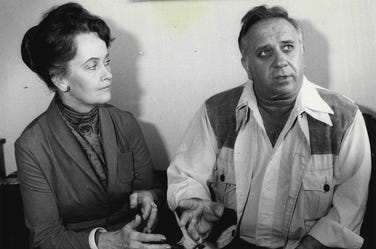
Another prominent figure entered the investigation when author and demonologist Ed Warren of New England Society for Psychic Research and his wife Lorraine Warren arrived from the United States. The Warrens were already known for their involvement in other high profile hauntings. Though their role in Enfield was brief, their presence added an international spotlight and a sense of ominous gravity to the case.

One of the most disturbing aspects of the Enfield case involved a disembodied voice that allegedly spoke through Janet. The voice was described as deep and gravelly, claiming to belong to an elderly man who had once lived in the house. Recordings captured the strange vocalizations, and witnesses insisted that Janet’s lips barely moved as the voice rasped out messages from somewhere unseen.
Investigators claimed to witness objects flying across rooms, curtains whipping violently, and even small fires igniting without clear cause. At times the activity seemed playful, knocking toys about or hiding personal items. At other moments it felt darker, more aggressive, as if whatever lingered there had grown tired of games.
Skeptics were never far behind. Magicians and psychologists suggested that at least some of the phenomena could be explained by trickery or attention seeking behavior. Janet herself was caught on camera bending spoons and admitted to faking certain incidents. For critics, that confession cast a long shadow over every unexplained moment.
Yet supporters of the haunting argued that no child could sustain such an elaborate hoax for so long under constant observation. The disturbances reportedly continued for over a year. Witnesses included journalists, neighbors, and trained investigators. Even if some events were staged, believers insisted that not all could be so easily dismissed.

The media coverage turned the Hodgson home into a strange kind of spectacle. Crowds gathered outside, hoping to hear a crash from within or catch a glimpse of something impossible through the windows. For the children, the experience was reportedly exhausting and frightening. Their ordinary lives had been swallowed by something they could neither control nor fully understand.
Over time, the intensity of the activity began to fade. By 1979, the phenomena had largely ceased, leaving behind a house that looked like any other on the street. The family attempted to return to normalcy, though the shadow of those years would never fully lift.
The Enfield Poltergeist remains one of the most documented cases in paranormal research. Audio recordings, photographs, witness statements, and investigator notes still circulate among enthusiasts and scholars alike. It has inspired books, television programs, and films, each retelling the story with its own emphasis on terror or skepticism.
Decades later, the house on Green Street still carries a whisper of unease. Whether one views the events as an elaborate hoax, a psychological drama, or genuine supernatural intrusion, the Enfield investigation lingers in the imagination. It is a reminder that sometimes the most disturbing stories unfold not in ancient castles or crumbling graveyards, but in ordinary homes where the walls seem to listen and the night feels just a little too alive.
References
Grosse, Maurice. “Field Notes and Audio Recordings: Enfield Poltergeist Investigation.” 1977–1979. Society for Psychical Research Archives, London.
Playfair, Guy Lyon. The Enfield Poltergeist. White Crow Books, 2016.
Playfair, Guy Lyon. This House Is Haunted: The True Story of the Enfield Poltergeist. White Crow Books, 1980.
“Poltergeist Disturbs Enfield Family.” Daily Mirror, 1977–1978.
Society for Psychical Research. Enfield Poltergeist Investigation Case Files, 1977–1979. Society for Psychical Research Archives, London.
Warren, Ed, and Lorraine Warren. Case materials and commentary on the Enfield Poltergeist. New England Society for Psychic Research, 1977.