


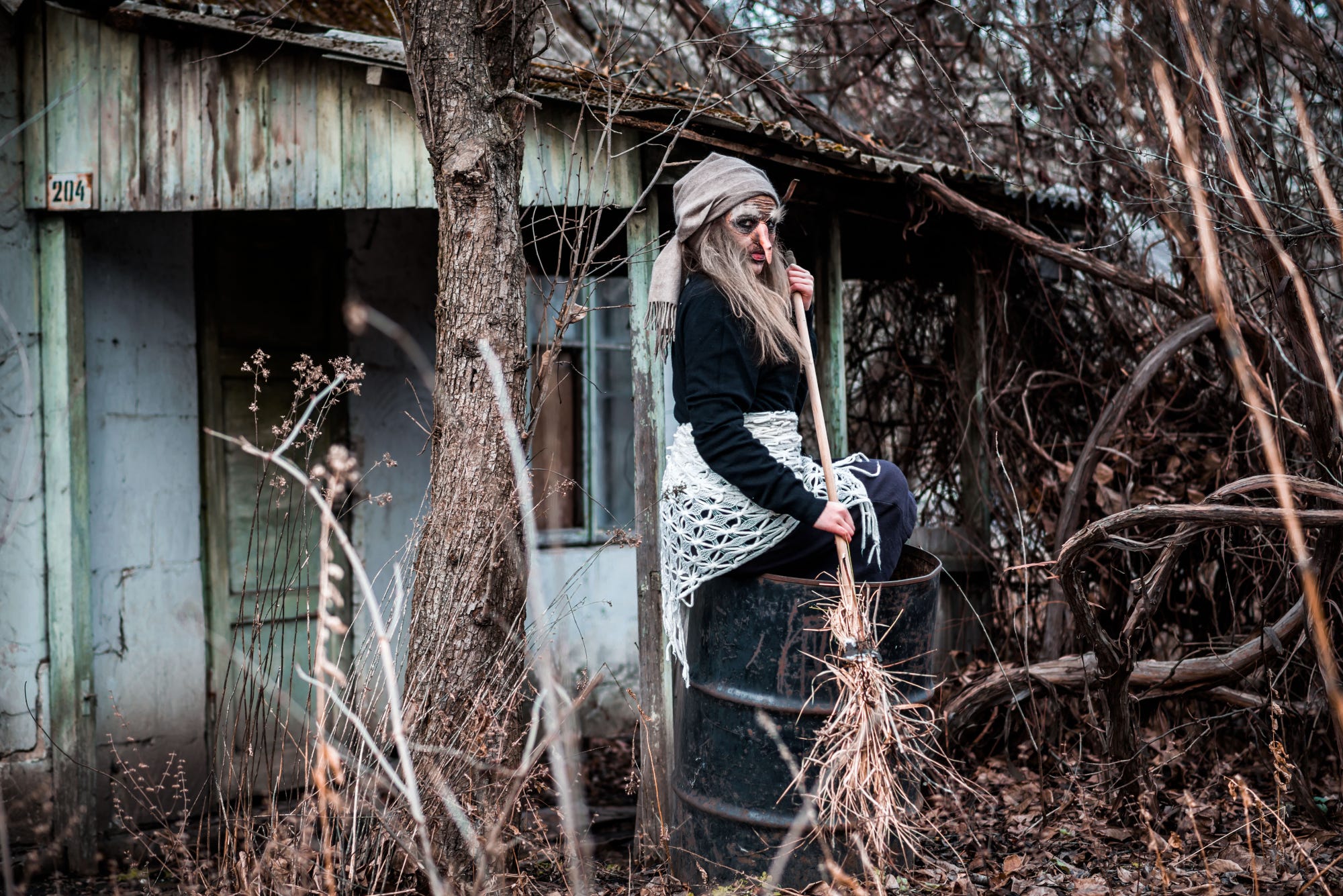
Slavic folklore is packed with strange forests, restless spirits, and old magic that feels older than memory itself. At the heart of it all stands one of the most fascinating and terrifying figures in European myth: Baba Yaga. She is not just a witch. She is the witch. A creature of the woods, a guardian of thresholds, and a reminder that nature does not care about human comfort.
Slavic witch lore stretches across regions like Russia, Poland, Ukraine, and Belarus. Each region has its own spin on magical women, forest spirits, and cunning healers. Some witches were wise village herbalists who knew how to cure fevers and ease childbirth. Others were feared as shape shifters who could curse livestock, spoil crops, or summon storms. In many ways, these stories reflect the tension between survival and superstition in rural communities.
Unlike the fairy tale witches of later Western European stories, Slavic witches often lived on the edge of society. They were neither fully evil nor entirely good. People might seek them out for help one day and blame them for misfortune the next. Magic in Slavic tradition was practical. It was about protection, healing, love charms, and warding off evil spirits.
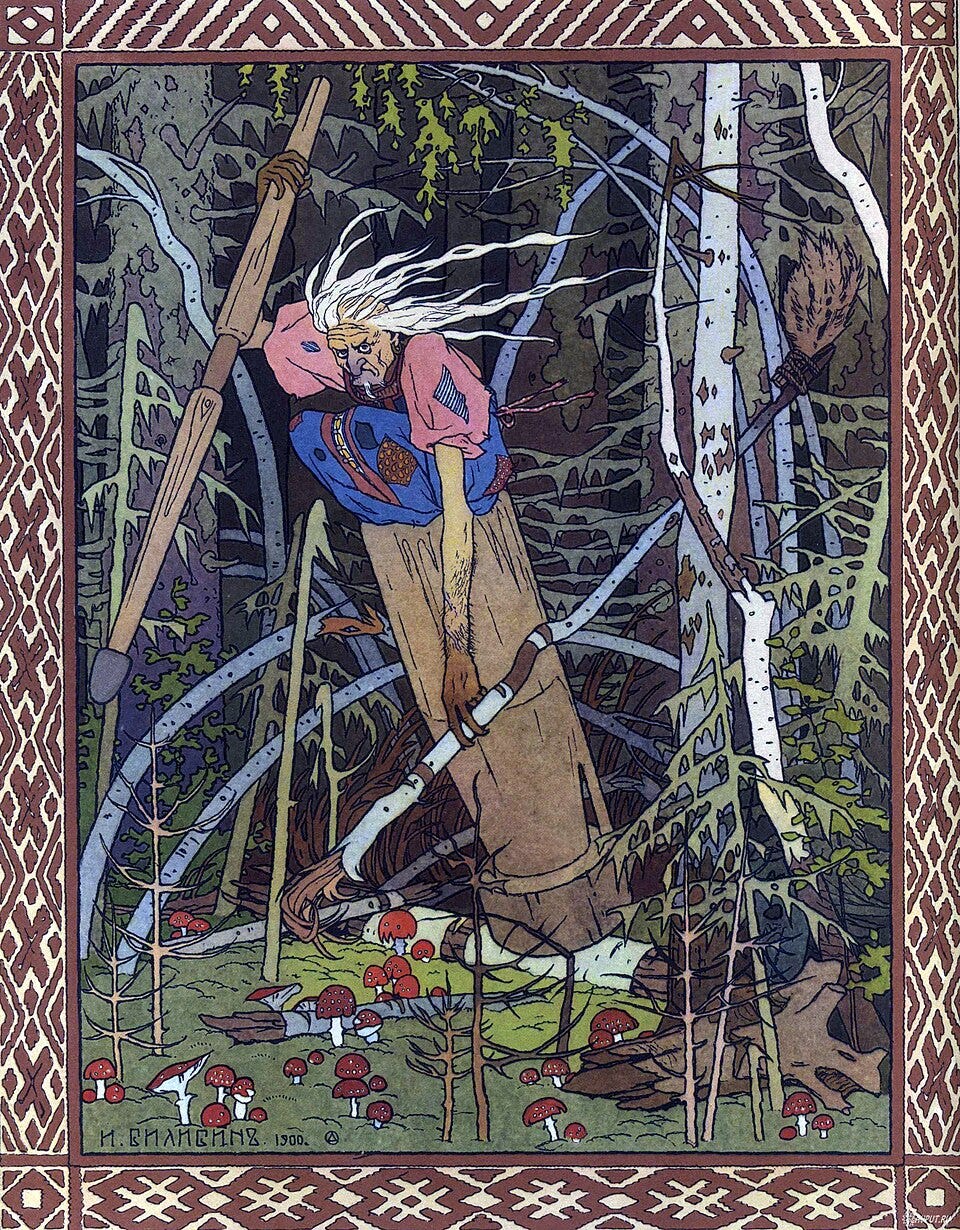

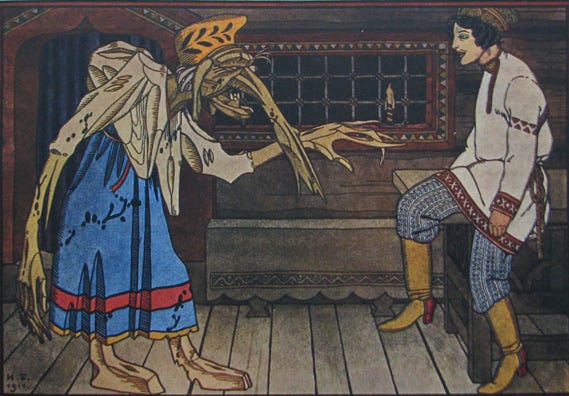
Then there is Baba Yaga, who feels like the embodiment of the wild itself. She is usually described as an old woman with iron teeth, a long crooked nose, and a terrifying presence. But she is not just a crone in a hut. Her house famously stands on chicken legs, turning and moving through the forest as if it has a mind of its own. The image alone is enough to unsettle anyone.
Her hut often sits deep in the woods, surrounded by a fence made of human bones. Skulls glow from the posts, lighting the darkness with eerie fire. These details are not just there for shock value. The forest in Slavic lore is a liminal space, a place between worlds. It is where heroes get lost, where spirits wander, and where transformation happens.
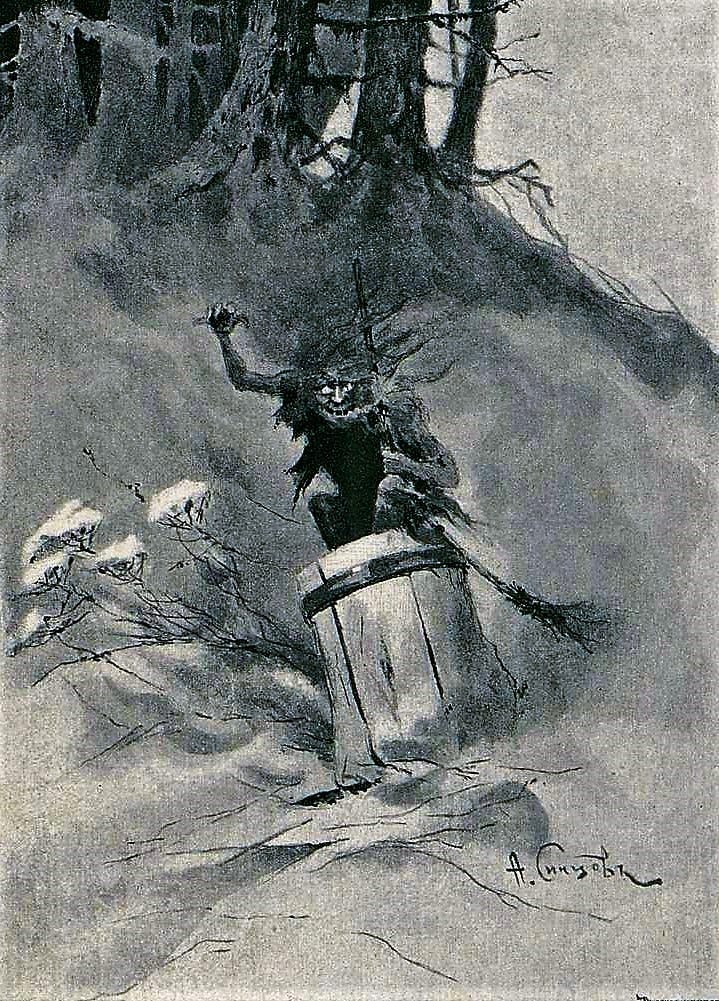
Baba Yaga herself travels in a giant mortar, steering with a pestle and sweeping away her tracks with a broom. It is such a strange detail that it almost feels playful, but it reinforces her connection to domestic tools twisted into something uncanny. Even everyday objects become magical in her hands.
The name Baba Yaga appears in many collections of Russian folktales, especially those gathered by Alexander Afanasyev in the 19th century. In these stories, she sometimes devours children. Other times she helps a brave young hero or heroine who shows respect and courage. She tests people. If they are lazy or rude, she destroys them. If they are clever and polite, she may offer magical assistance.

One of the most famous tales involving her is the story of Vasilisa the Beautiful. In that story, Vasilisa is sent into the forest by her cruel stepmother to seek fire from Baba Yaga. Instead of being eaten, Vasilisa survives by following instructions carefully and showing humility. Baba Yaga eventually gives her a skull lantern filled with fire, which later destroys her wicked family. The witch becomes a strange agent of justice.
This dual nature is key to understanding Slavic witch lore. Magic is not automatically evil. It is power, and power depends on how it is approached. Baba Yaga represents raw, ancient power tied to the land. She can be a devourer, but she can also be a guide through hardship.
Some scholars connect her to older pagan beliefs that existed before the spread of Christianity in Eastern Europe. She may echo ancient goddesses of death, winter, or the earth itself. As Christianity spread, many older deities and spirits were reshaped into witches or demons. Baba Yaga may be a memory of something much older, filtered through centuries of storytelling.
Slavic witches in general were often associated with night travel, spirit flight, and gatherings that sound a lot like the sabbaths described in Western European witch trials. But unlike the heavily demonized witches of places like early modern Germany or France, Slavic lore kept more of that moral gray area. The witch could curse you, but she could also save your life.

The fear of witches in Slavic villages was very real. Protective charms, embroidered symbols, and household rituals were used to keep dark forces away. Garlic, iron objects, and specific prayers were thought to ward off harmful magic. Even so, people still whispered about women who could turn into animals or ride the winds at night.
What makes Baba Yaga endure is that she refuses to be simplified. She is not just a villain for children’s tales. She is the forest grandmother who teaches hard lessons. She forces characters to face fear, responsibility, and maturity. In many stories, surviving her trials marks the end of childhood and the beginning of wisdom.
Today, Baba Yaga shows up in books, films, and modern fantasy, often reimagined but still unmistakable. Her hut on chicken legs remains one of the most iconic images in folklore. She reminds us that magic in Slavic tradition is not glitter and spells whispered under a full moon. It is wild, dangerous, and deeply connected to the earth.
In the end, Slavic witch lore and the legend of Baba Yaga are about boundaries. The boundary between life and death. The boundary between child and adult. The boundary between civilization and the dark forest waiting just beyond the last village. And somewhere in that forest, the old witch still waits, testing anyone brave enough to knock on her door.
References
Alexander Afanasyev – Narodnye russkie skazki (Russian Fairy Tales), 1855–1867.
This is the primary 19th century collection of Russian folktales where many Baba Yaga stories, including variants of Vasilisa, were recorded.
Vladimir Propp – Morphology of the Folktale (1928).
Propp analyzes recurring structural elements in Russian folktales, including the archetypal roles played by figures like Baba Yaga.
Vladimir Propp – Historical Roots of the Wonder Tale (1946).
Explores possible pre-Christian ritual and mythic origins of folktale characters such as Baba Yaga.
Andreas Johns – Baba Yaga: The Ambiguous Mother and Witch of the Russian Folktale (1997).
A focused academic study examining Baba Yaga’s dual role as both devourer and helper.
Linda J. Ivanits – Russian Folk Belief (1989).
Discusses Slavic folk religion, magic practices, and witch beliefs in rural communities.
Jack V. Haney – The Complete Russian Folktale (1999–2006).
A comprehensive multi-volume collection and translation of Russian tales, including numerous Baba Yaga variants.
W. F. Ryan – The Bathhouse at Midnight: An Historical Survey of Magic and Divination in Russia (1999).
Covers historical magical practices, folk belief, and witchcraft traditions in Russia.