


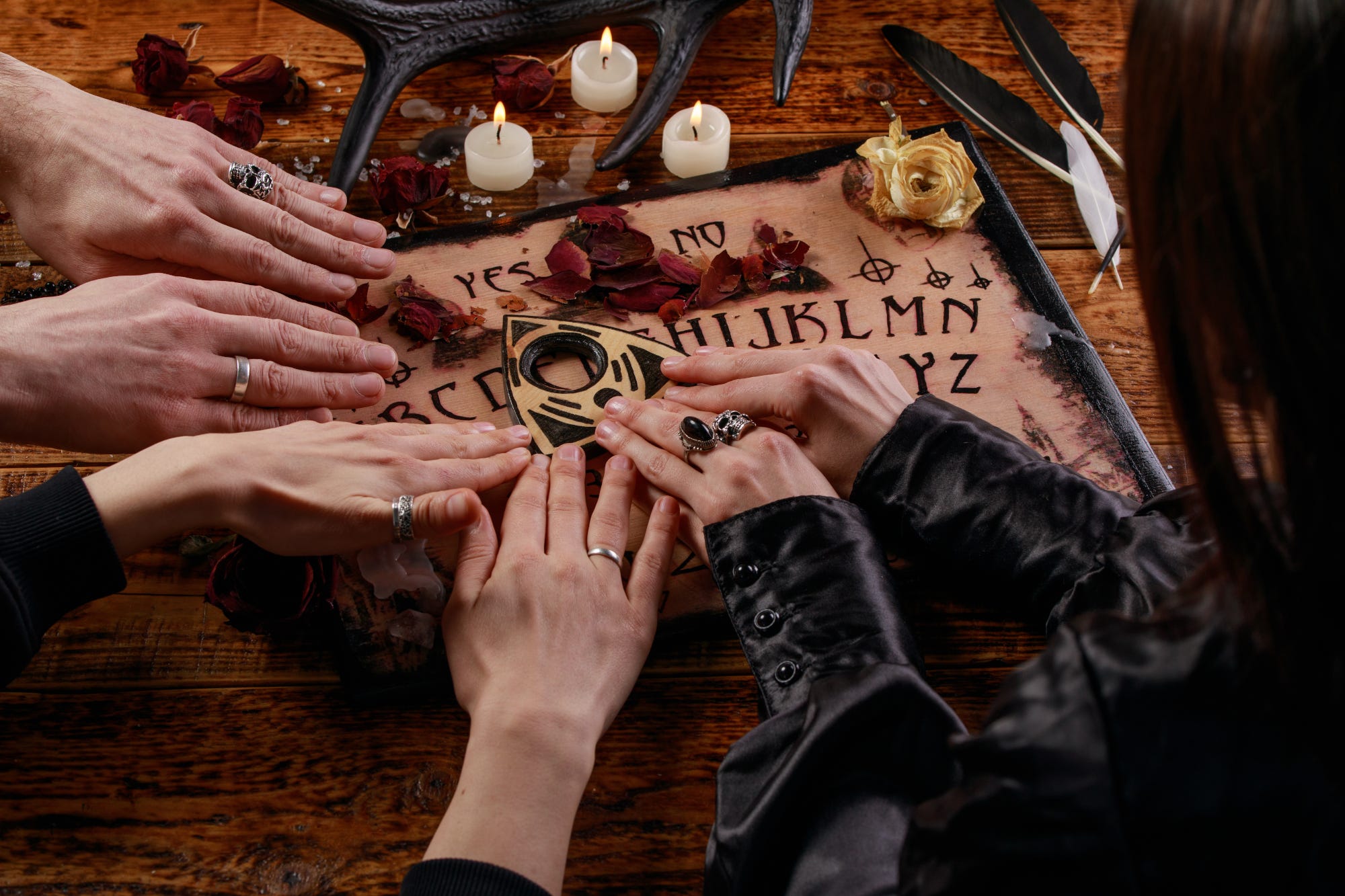
Séances have long held a strange and magnetic place in the world of the occult. The term comes from the French word "to sit", which is exactly what people did, and still do, gather in a room to attempt communication with the dead. Whether viewed as sacred ritual, psychological theater, or outright fraud, séances have shaped spiritual movements and cultural concerns for nearly two centuries.
The modern session, as most people imagine it, took shape in the mid-nineteenth century, particularly in the United States and Britain. Although attempts to speak to the dead date back to ancient times, it was the rise of modern spiritualism that transformed private superstition into organized practice. A major spark came with strange events surrounding the Fox sisters in Hydesville, New York in 1848.
Margaret and Kate Fox claimed to communicate with a spirit through mysterious rappings that answered questions. News spread quickly and soon demonstrations were held in packed parlors across the country. Whether the sounds were genuine spiritual phenomena or cleverly created noises became a subject of heated debate, but the movement had already caught fire.
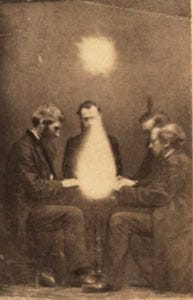

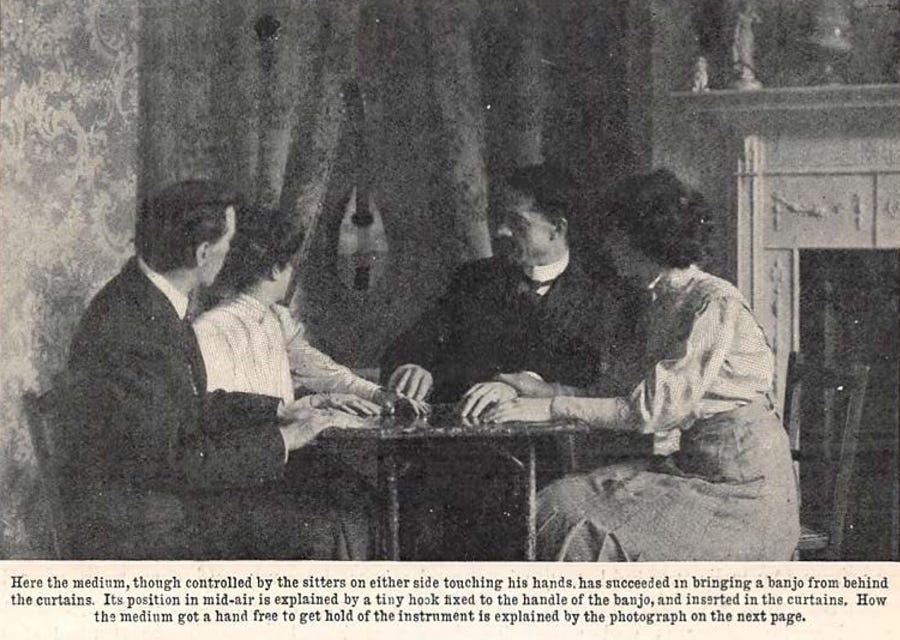
From there, Spiritualism crossed the Atlantic and found fertile ground in Victorian England. The public's fascination with death was already intense due to high mortality rates and elaborate mourning rituals. The sessions became both social entertainment and spiritual exploration, often held in dimly lit drawing rooms covered with heavy curtains.
In Britain, one of the most famous mediums was Daniel Dunglas Home. He became known for dramatic performances such as levitation and spiritual hands appearing in the dark. Unlike many mediums of his era, he was never exposed as a fraud during his lifetime, although skeptics remained unconvinced.
The typical nineteenth-century session followed a familiar structure. Participants sat in a circle around a table, often holding hands to create a unified spiritual stream. The room will be darkened to encourage manifestations, and the medium will enter a trance state.
Early sessions often involved simple phenomena such as table tipping, spirit raps, or automatic writing. Over time, more dramatic performances evolved. These included spirit trumpets that gave rise to ghostly voices, floating objects, and the presence of ectoplasm, a mysterious substance said to seep from the medium's body as evidence of the presence of the spirit.
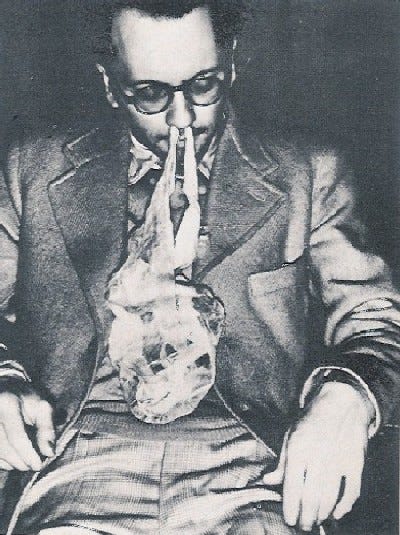

Ectoplasm became particularly associated with the physical medium in the late nineteenth and early twentieth centuries. Photographs from this period depict mediums with fluids flowing from their mouths or noses. In many cases, investigation later revealed cheesecloth, paper, or other mundane materials used to simulate extraterrestrial matter.
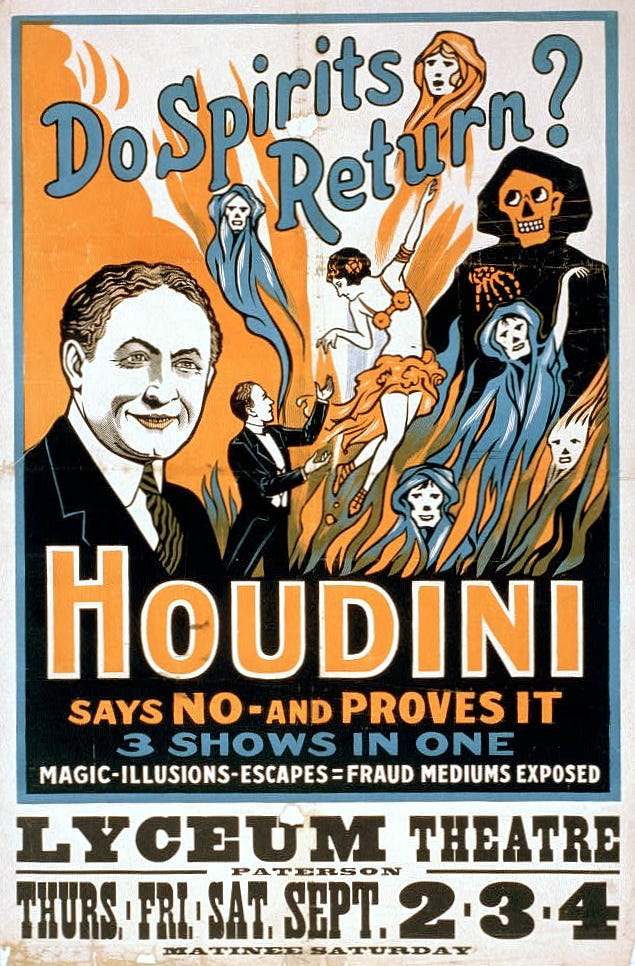
The movement also attracted serious intellectual attention. Figures such as Arthur Conan Doyle, best known for creating Sherlock Holmes, became ardent defenders of Spiritualism. At the same time, skeptics such as Harry Houdini made significant efforts to expose fraudulent mediums.
.jpg)
Organizations emerged to scientifically investigate the claims. The Society for Psychical Research, founded in London in 1882, aimed to study psychic phenomena with academic rigor. Members conducted controlled experiments and published detailed reports attempting to distinguish genuine secrets from fraudulent ones.
Beyond show and controversy, the sessions also addressed deep emotional needs. In an era marked by war, disease, and high child mortality, the promise of contact with lost loved ones provided comfort. Particularly after World War I, grieving families flocked to mediums in hopes of reassurance from sons and husbands lost on the battlefield.
In the twentieth century, interest in the sessions ebbed and flowed. The rise of platform mentality and exposure of fraudulent practices damaged public trust, yet private circles continued. The countercultural movements of the 1960s and 1970s revived interest in spirit communication, blending it with broader New Age spirituality.
Even today the sessions take place in various forms. Some are rooted in traditional Spiritualist churches, while others are informal gatherings among friends that experiment with spirit boards or guided meditations. Television and film have also kept this image alive, often portraying the sessions as a gateway to fear rather than comfort.

Practically speaking, a modern session usually involves setting intention, creating a calming environment, and respectfully inviting communication. Participants may light candles, say a prayer, or focus collectively on a specific deceased person. Skeptics argue that the phenomena can be explained by suggestion, group psychology, or unconscious movement, especially in the case of talking boards.
In the end, the session sits at the intersection of faith, grief, performance, and mystery. For some people, it represents a real connection with another area. For others, it is a fascinating chapter in cultural history that explores how humans grapple with mortality and the unknown. No matter where one stands, séances remain a powerful symbol of our enduring desire to reach beyond the veil and ask if someone is listening.
References
Wikipedia page for Séance: https://en.wikipedia.org/wiki/S%C3%A9ance
Definition of “séance” as a meeting to attempt communication with spirits, with the word coming from French meaning a session or sitting.
Wikipedia page for Spiritualism: https://en.wikipedia.org/wiki/Spiritualism_%28movement%29
The Fox sisters (Margaret “Maggie” and Kate) claimed spirit communication through rappings in Hydesville, New York in 1848, which played a central role in launching Modern Spiritualism.
Wikipedia page for the Fox Sisters: https://en.wikipedia.org/wiki/Fox_sisters
Maggie later admitted the rappings were a hoax, but the movement continued and she recanted the confession.
National Geographic: ‘I hear dead people’: How the world went wild for talking to spirits 100 years ago
Spiritualism grew as a widespread cultural phenomenon in the mid to late 19th century in the U.S. and Europe, with séances forming a core practice.
Victorian culture saw deep interest in communicating with the dead through séances; rooms were often darkened, sitters gathered together, and mediums attempted to contact spirits.
History: Talking to the Dead: How the 1918 Pandemic Spurred a Spiritualism Craze
Harry Houdini actively investigated and exposed fraudulent mediums and false Spiritualist claims, especially after World War I.