


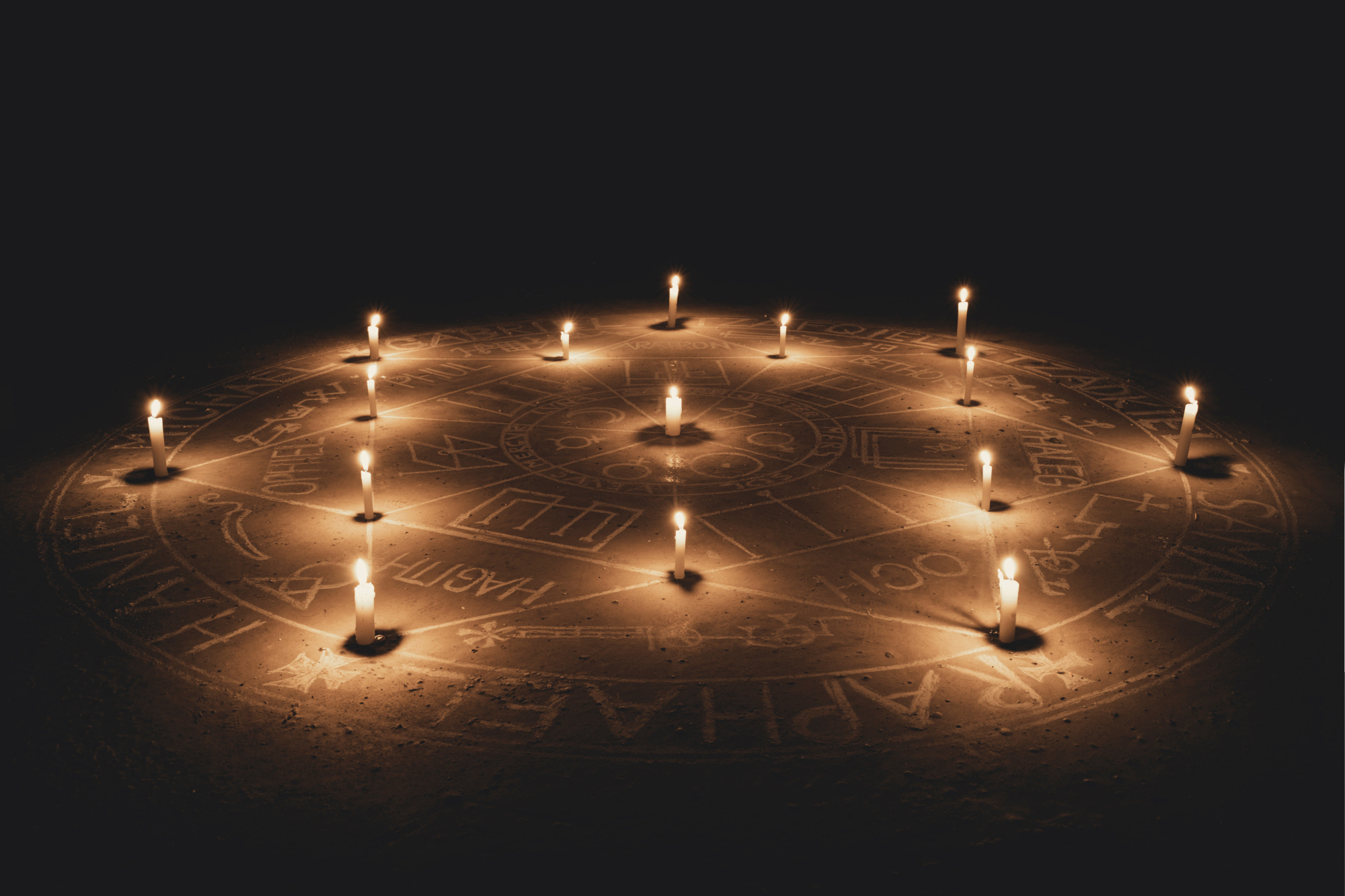
There is something unsettling about a symbol that feels older than memory. Demon sigils are exactly that. They are intricate marks said to represent specific infernal entities, each line and curve carrying intention, identity, and power. To some, they are works of occult art. To others, they are doorways.
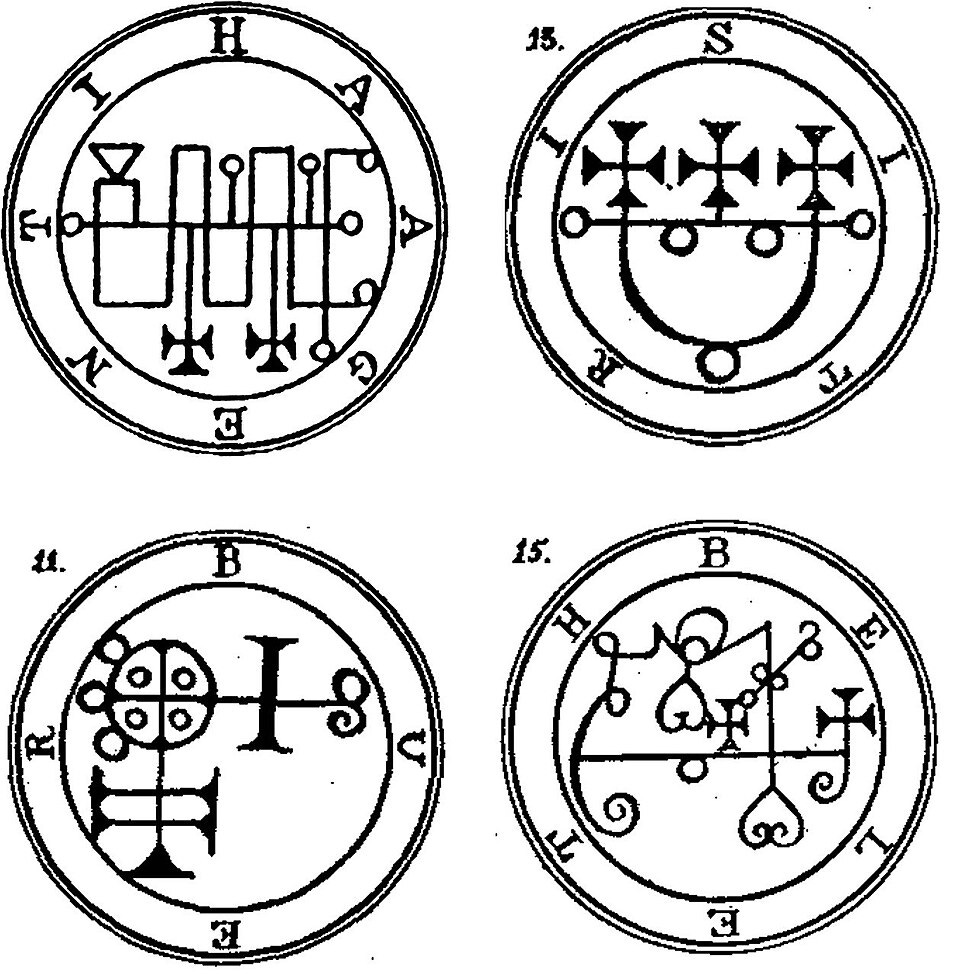
The idea of demon sigils is most famously associated with the 17th century grimoire (a book of spells) known as the Lesser Key of Solomon, also called the Lemegeton. This text catalogues seventy two spirits, many of whom are referred to as demons, and provides a unique sigil for each one. These symbols were not decorative. They were believed to function as seals that identified and constrained the spirit being summoned.

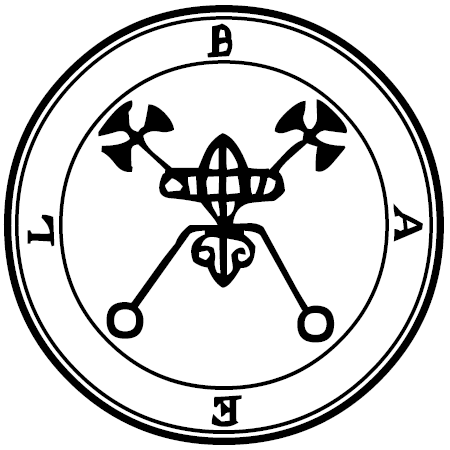
One of the most recognized figures in the text is Bael, listed as the first spirit. His sigil is composed of looping lines and intersecting strokes that seem almost insect like in their geometry. Bael is said to grant invisibility and wisdom. His sigil, drawn correctly, was believed to help the practitioner call him forth and command his presence.
Another well known spirit is Paimon, often depicted as a king riding a camel. His sigil looks more fluid, almost regal in its symmetry. Practitioners claim that Paimon imparts knowledge of the arts and sciences. The sigil acts as his signature, a metaphysical stamp that aligns the ritual space with his supposed frequency.

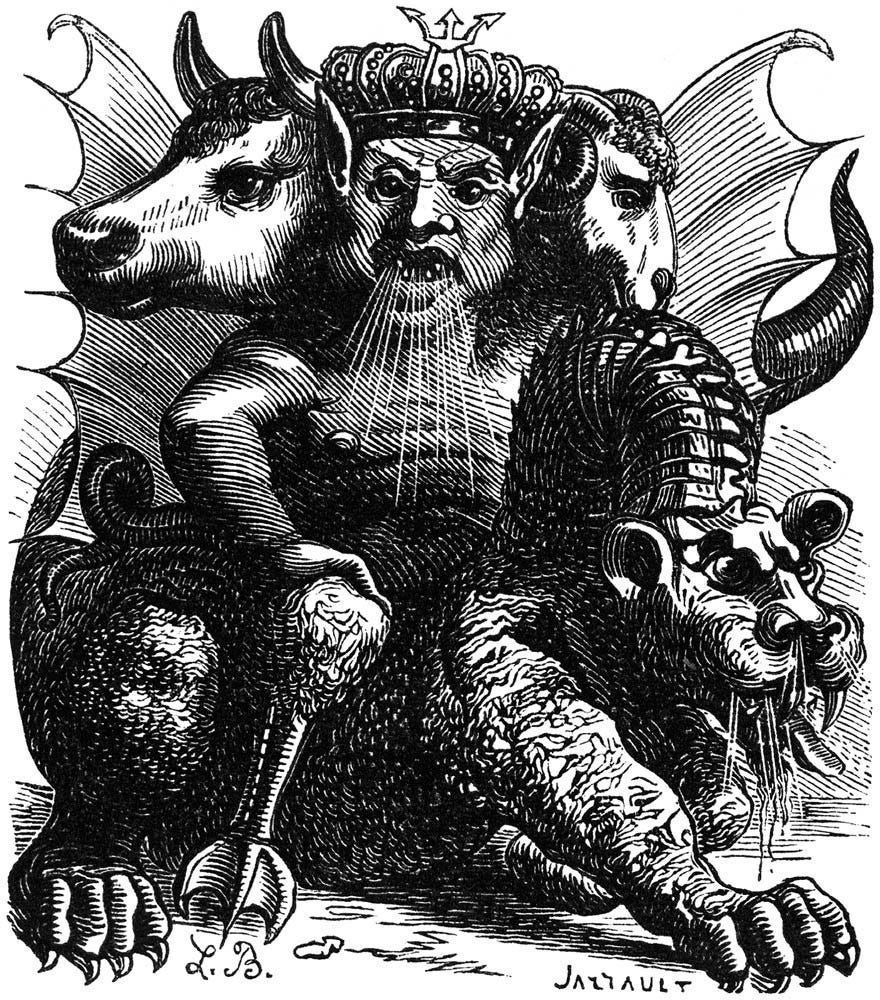
Then there is Asmodeus, whose sigil is sharp and angular, reflecting his reputation for stirring desire and chaos. In occult traditions, Asmodeus is associated with lust and hidden knowledge. His symbol is often described as feeling charged, as if the angles themselves resist stillness.
The belief underlying these sigils is simple and unnerving. To know a spirit’s true seal is to hold a fragment of authority over it. Medieval and Renaissance magicians thought that a demon could not fully manifest without its sigil being properly inscribed within a ritual circle. The sigil was both invitation and leash.

Outside of the Lemegeton, demon sigils appear in other grimoires such as the Grand Grimoire. This text introduces the sigil of Lucifer and other infernal figures. The designs in this grimoire often feel more elaborate, layered with circles and cryptic script, suggesting an evolution of occult symbolism over time.
In modern occult practice, sigils have taken on a broader meaning. The chaos magician Austin Osman Spare developed a system of sigil magic in the early 20th century. Rather than summoning demons, Spare taught practitioners to create personal sigils from written intentions. The symbol would then be charged with focus and released into the subconscious. Though different in purpose, the concept echoes older beliefs that symbols can carry will and shape reality.


Some contemporary practitioners still work with the traditional demon sigils from the Ars Goetia. They redraw them carefully, often in ink or carved into candle wax, believing precision matters. A misplaced line, according to lore, could attract the wrong entity or distort the ritual’s outcome.
Skeptics argue that these sigils hold no inherent power. They are historical artifacts, products of religious imagination and fear. The shapes are compelling because the human mind seeks patterns and meaning. When someone believes a symbol is dangerous, it can begin to feel dangerous.
Yet even skeptics admit there is something psychologically potent about them. Staring at a demon sigil for too long can produce a strange sensation, as if the lines are shifting. This effect is not supernatural but rooted in the brain’s pattern recognition systems. Still, the experience can be unsettling.
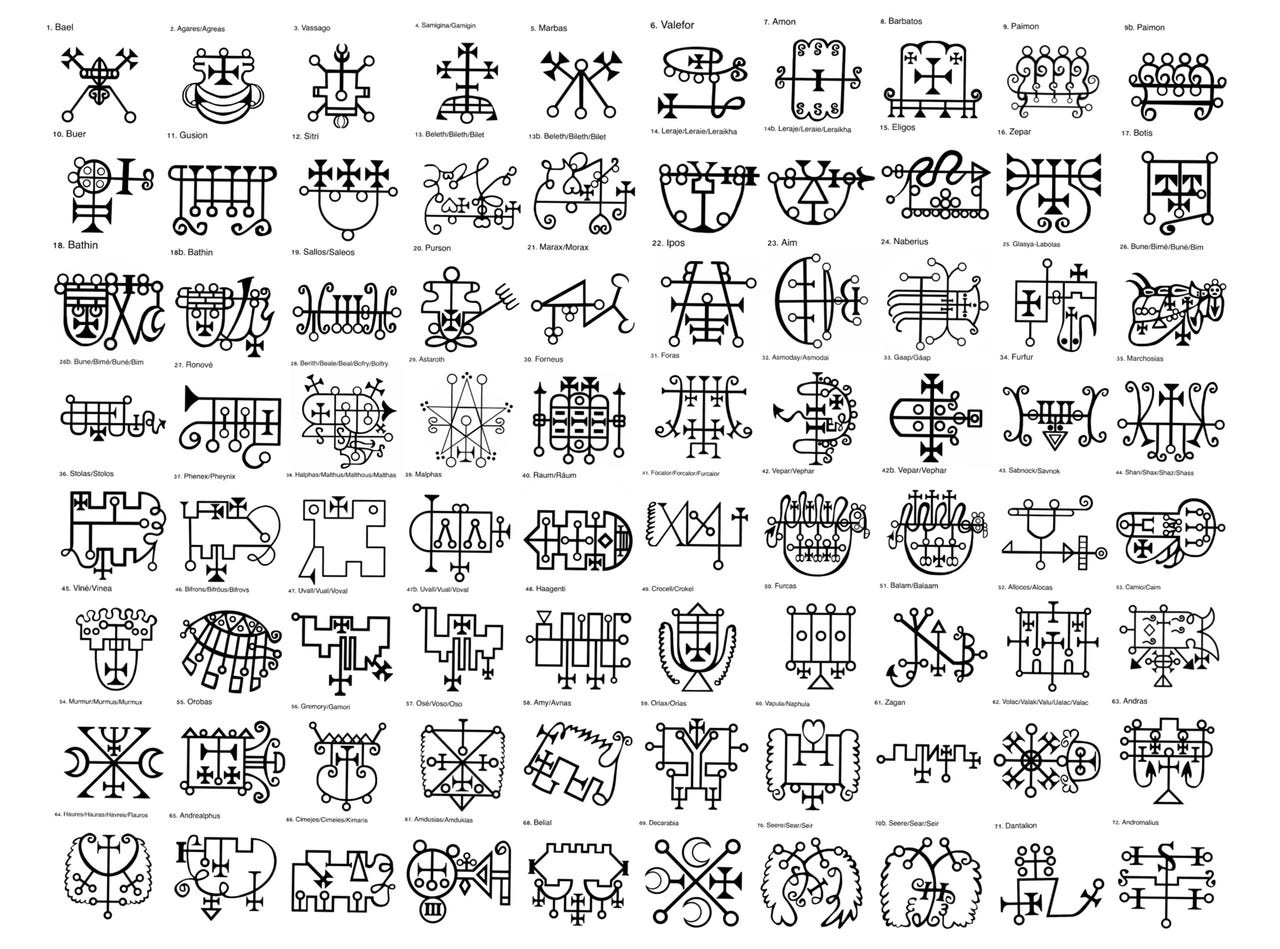

In popular culture, demon sigils have found new life. Films, television series, and horror novels frequently use them as shorthand for forbidden knowledge. A character draws a strange mark on the floor and the audience instantly understands that something ancient has been invoked. The symbol becomes a visual whisper of dread.
Ultimately, the meaning of a demon sigil depends on the framework through which it is viewed. For a devout believer in ceremonial magic, it is a sacred key. For a historian, it is a window into early modern fears about the unseen world. For an artist, it is an abstract composition loaded with myth.
Whether one sees them as tools of summoning or relics of superstition, demon sigils endure because they embody a powerful idea. That a simple mark on paper could bridge the visible and invisible. That a few lines, drawn in silence, might call something back.
References
Ars Goetia. In The Lesser Key of Solomon. Translated by S. L. MacGregor Mathers, edited by Aleister Crowley, Weiser Books, 1995.
Austin Osman Spare. The Book of Pleasure (Self-Love): The Psychology of Ecstasy. Privately published, 1913.
Davies, Owen. Grimoires: A History of Magic Books. Oxford University Press, 2009.
Grand Grimoire. Translated by A. E. Waite, Rider & Company, 1910.
Kieckhefer, Richard. Magic in the Middle Ages. Cambridge University Press, 2014.
Lesser Key of Solomon. The Lesser Key of Solomon. Translated by S. L. MacGregor Mathers, edited by Aleister Crowley, Weiser Books, 1995.
Peterson, Joseph H., editor and translator. The Lesser Key of Solomon. Weiser Books, 2001.
Shaping reality? Or shaping consciousness? Are those the same? …If they are, why do we split them that way?
What about shaping the unconscious(ness)? …Another split?
One could keep splitting, perhaps seeking what is fundamental and un-splittable. Perhaps the goal is the revelation of previously unseen connections within the complexities? Or do such relationships somehow “emerge” — and if they do, from where? From the parts themselves? Or from within our perceptions of them?
These symbols are about powers and intentions. But whose? And must powers belong to any single entity, however imagined? Could it be that way? Ever?
But those entities (however imagined) are always parts of some greater manifold which can never be defined or encompassed. Only perceived in bits and bytes — and impacts and vacancies. And then there are all the forces and entities that cannot be directly perceived, whose impacts and absences themselves are only rarely noted. And we wonder whether and when “noticing” and “imagining” are one and the same. And when and whether they are being hurled in opposite directions.
With every split, every cut, isn’t there an opportunity cost? Couldn’t there have been another way of slicing, now foregone unless that last severance is reversed? Could it ever be?
Language, music, and images. That’s another tripartite split. Language tends to coalesce into stories. And don’t music and images tend to emerge from, support, or even inspire stories? And stories, like music and images, are always bound and framed. They are “cut” out of something vaster. And the way these cuts are made are not always by choice or even by the compulsions of our limitations.
Language (at least as expressed) involves sequencing. Music (also trapped in time) involves tensions and releases. Images can seem to stand out of time. Their involvement is with composition and compression. And always, there is expectation. And can expectation ever be completely severed from imagination?