


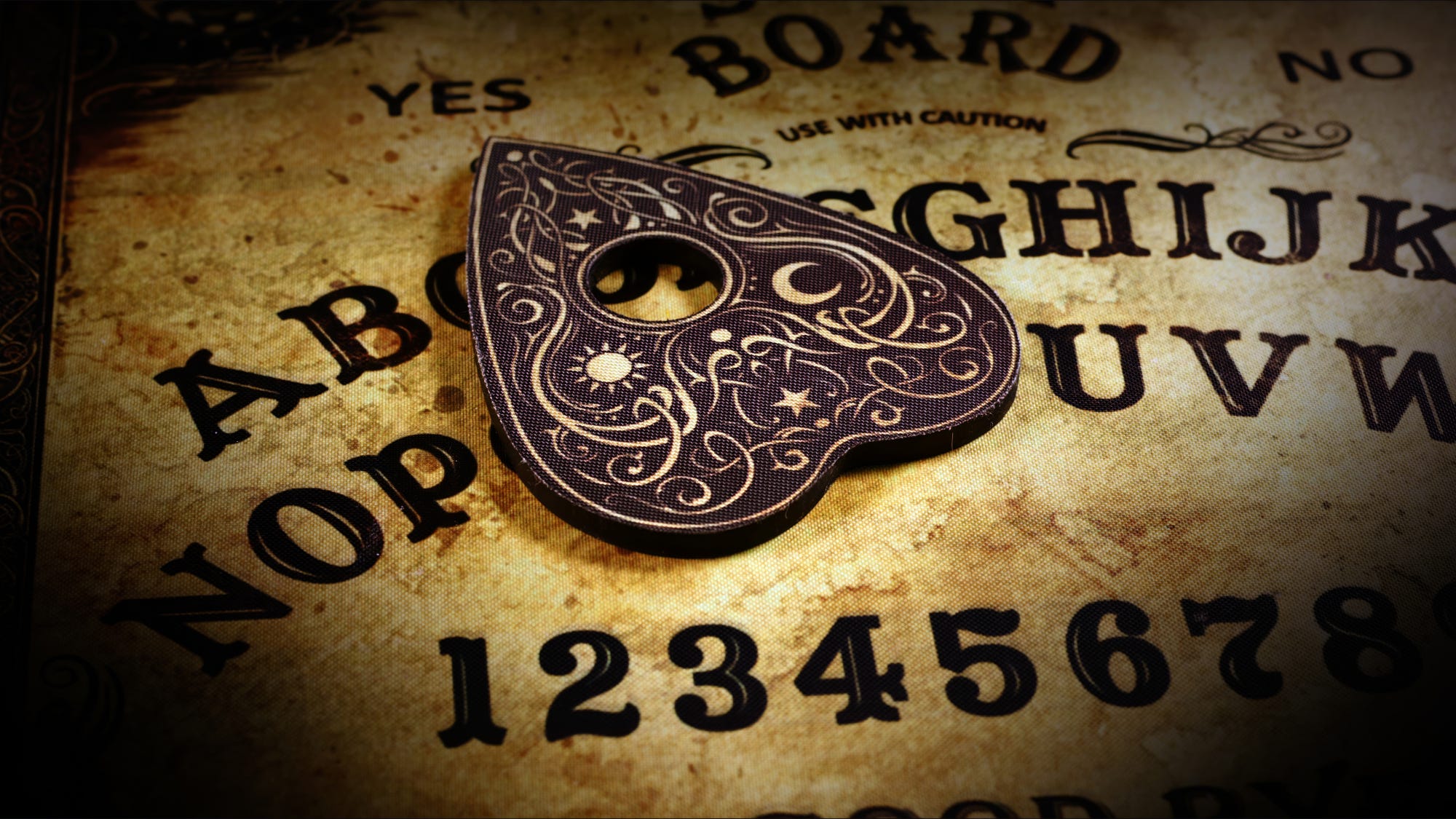
The idea of talking to the dead has fascinated people for as long as we have been burying them. Across cultures and centuries, humans have searched for ways to peek beyond the veil. One of the most famous tools for doing that in the modern West is the spirit board, better known today as the Ouija board. Love it or fear it, the board has carved out a permanent place in occult lore and pop culture.
Spirit boards did not just appear out of nowhere in the 19th century. They grew out of the wider Spiritualist movement that swept through the United States and parts of Europe in the mid-1800s. After the mysterious rappings associated with the Fox sisters in 1848, séances became a popular pastime. People gathered in dimly lit parlors hoping to receive coded knocks, table tilts, or automatic writing from the beyond.
Séances: When the Dead Join the Conversation

Séances have long held a strange and magnetic place in the world of the occult. The term comes from the French word "to sit", which is exactly what people did, and still do, gather in a room to attempt communication with the dead. Whether viewed as sacred ritual, psychological theater, or outright fraud, séances have shaped spiritual movements and cultu…
As Spiritualism evolved, so did the tools used to communicate. Early practitioners often used “talking boards” that had letters and numbers arranged on a surface. Participants would use a small indicator, sometimes a simple glass or pointer, to spell out messages. These early boards were homemade and varied widely in design.
In 1890, the concept was commercialized when Elijah Bond patented a talking board, and it was soon marketed by businessman William Fuld. The name “Ouija” itself has an origin story that blends myth and marketing. According to popular accounts, it was said to mean “good luck,” though historians debate that explanation. Regardless of the truth, the name stuck.
By the early 20th century, the Ouija board had become a household novelty. It was sold as a parlor game rather than a sacred ritual tool. Families would gather around the table after dinner, place their fingers on the planchette, and ask playful questions. For many, it was more entertainment than spiritual practice.
The basic design has remained mostly consistent. A flat board displays the alphabet, numbers zero through nine, and the words “yes,” “no,” and “goodbye.” The planchette, a small heart shaped pointer with a window, glides across the board as participants lightly rest their fingers on it. The movement is said to spell out messages from spirits.
Believers claim the board acts as a doorway, a kind of spiritual telephone. They often recommend setting intentions, offering prayers, or creating protective circles before a session. Some treat the experience with deep reverence, viewing it as genuine communication with departed loved ones or other entities.
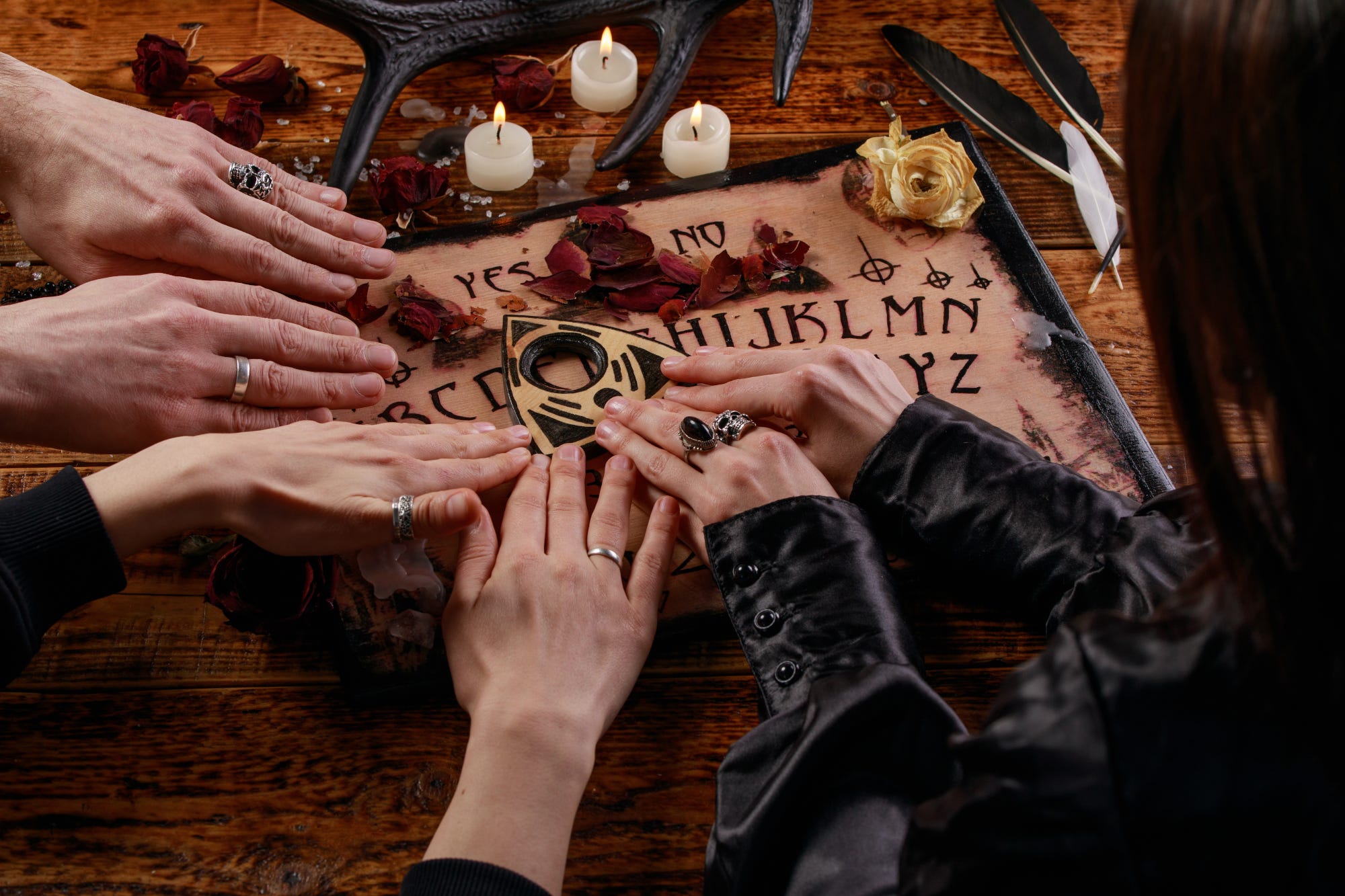
Skeptics, on the other hand, point to the ideomotor effect. This psychological phenomenon explains how small, unconscious muscle movements can guide the planchette without participants realizing they are doing it. In this view, the board reflects the expectations and thoughts of the users rather than outside spirits.
The board’s darker reputation was cemented in the 20th century through books and film. Horror stories circulated about sessions gone wrong, mysterious scratches, and ominous predictions. The 1973 film The Exorcist famously featured a young girl communicating with an entity through a spirit board, fueling fears that the game could invite dangerous forces.
Despite waves of moral panic, the board has survived. Today it is produced by major toy companies and sold in mainstream stores. At the same time, it remains a staple in occult shops and among paranormal enthusiasts. Its dual identity as both toy and taboo object keeps it culturally relevant.
In practice, a typical session involves two or more people sitting around the board with their fingers lightly touching the planchette. Questions are asked aloud, often starting simple. Participants watch closely as the pointer begins to move, sometimes slowly and deliberately, sometimes in quick, jerky motions. The session usually ends by guiding the planchette to “goodbye,” which is said to close the connection.
Whether one sees it as a psychological curiosity, a harmless party game, or a genuine portal to the afterlife, the spirit board continues to fascinate. It taps into something deeply human: the desire to know what lies beyond death. In that sense, the board is less about wood and cardboard and more about our eternal curiosity about the unknown.