



Few modern stories about exorcism have become as disturbing and controversial as that of Anneliese Michel. Her story has inspired books, documentaries, debates about demonic possession, and films such as The Exorcism of Emily Rose. Beneath all of that mythology, however, was a real young woman whose life became increasingly difficult as her physical and psychological problems were interpreted through the lens of her deeply held Catholic faith. Her death in 1976 eventually led to a highly publicized criminal trial in Germany.
Anneliese was born in 1952 in Klingenberg am Main, Bavaria, into a devout Catholic family. Religion was not simply something practiced occasionally in the Michel household. It was an important part of everyday life, and Anneliese herself was intensely religious. Accounts from people who knew her describe a young woman who prayed regularly and surrounded herself with religious objects. She eventually studied education at the University of Würzburg and was training to become a teacher.


Her problems began during adolescence. At around sixteen, Anneliese experienced a severe seizure and was subsequently diagnosed with epilepsy. Medical treatment followed, but her condition did not simply disappear. Over the following years she experienced additional seizures and increasingly troubling psychological symptoms, including hallucinations and frightening experiences that she and her family eventually interpreted in religious terms. Contemporary accounts indicate that she also received psychiatric care.
This is where the story becomes complicated. Anneliese’s experiences were not imaginary in the sense that she was simply pretending to be ill. She was genuinely suffering. The disagreement concerned what was causing that suffering. Doctors approached her symptoms as manifestations of neurological and psychiatric illness, while Anneliese and some people around her increasingly believed that something supernatural was involved. A later medical analysis described the case in terms of epilepsy combined with paranoid-hallucinatory psychosis and significant psychosocial factors.
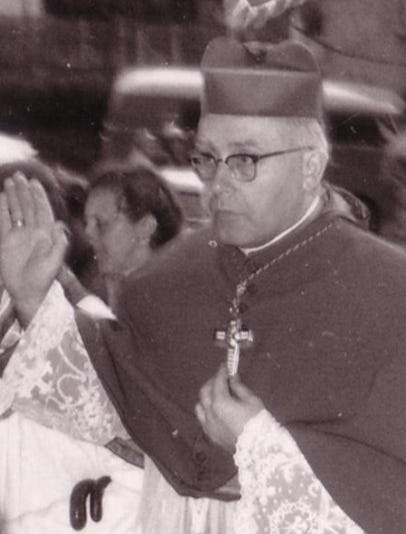
Eventually, the Michel family turned increasingly toward the Catholic Church. Father Ernst Alt became involved in the case and came to believe that Anneliese might be suffering from demonic possession. Another priest, Father Arnold Renz, was eventually assigned to perform the formal rite of exorcism. The Bishop of Würzburg, Josef Stangl, gave authorization for the rite in 1975. This was not simply a couple of priests secretly deciding to conduct an exorcism. The ritual received official ecclesiastical authorization.

The exorcism itself followed the Catholic Rituale Romanum, the traditional ritual book containing the Church’s formal rites. Sessions took place at the Michel family home, often involving prayers, commands directed at supposed demons, crucifixes, holy water, and other religious objects. Recordings were made during some of the sessions, and those tapes would later become a major part of the sensational public interest surrounding the case. Reports from the trial described dozens of sessions taking place over many months.
The recordings are perhaps the most unsettling part of the entire story. On them, Anneliese can be heard screaming, speaking in unusual voices, and making statements that those present interpreted as coming from demons. The priests believed that several different entities were speaking through her. Among the names later associated with the recordings were Lucifer, Judas, Nero, and other supposed spirits. For believers in possession, the recordings seemed extraordinary. From a medical perspective, however, unusual speech and behavior can occur during severe psychiatric or neurological disorders, and the recordings by themselves cannot establish a supernatural explanation.
As the exorcisms continued, Anneliese’s physical condition deteriorated dramatically. She stopped eating properly and became severely malnourished and dehydrated. Reports from the period describe her becoming extremely thin and physically injured. By the final stages, she was barely able to care for herself. Despite this, the exorcism sessions continued. The central tragedy of the case is that the physical danger was becoming increasingly obvious while those around her continued to interpret what was happening primarily as a spiritual crisis.
On June 30, 1976, Anneliese took part in what would be her final exorcism session. She was profoundly weakened by that point. Accounts of her final hours differ in some details, but contemporary reports state that she spoke about being afraid and asked for absolution. The following morning, July 1, her mother discovered that she had died. She was only twenty-three years old. The autopsy attributed her death to severe malnutrition and dehydration.
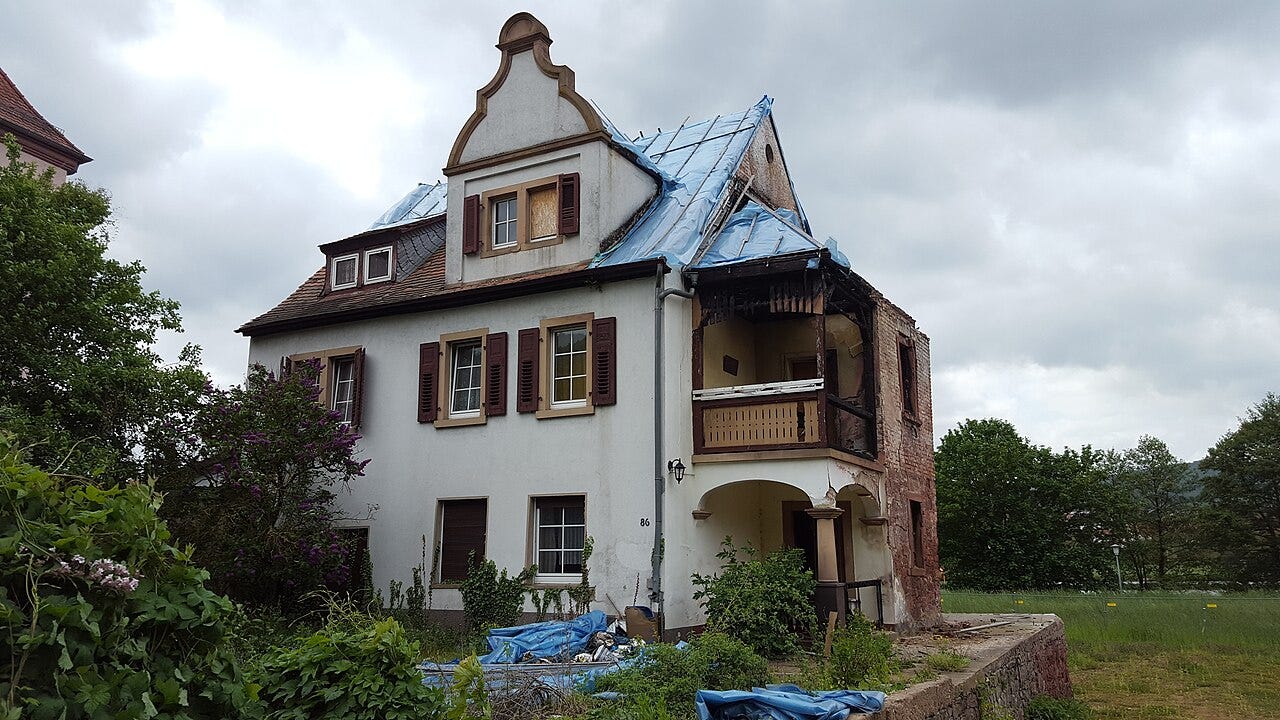

Her death immediately attracted the attention of German authorities. Father Alt contacted the authorities and reported what had happened, and an investigation followed. The case became a national sensation because it raised an uncomfortable question: where does religious freedom end when someone is seriously ill and potentially in danger of dying? The investigation eventually focused not on whether exorcism itself was permissible, but on whether the people responsible for Anneliese had failed in their duty to obtain medical assistance.
The resulting trial began in 1978 at the Aschaffenburg Regional Court. Anneliese’s parents, Anna and Josef Michel, and the two priests involved in the exorcisms, Ernst Alt and Arnold Renz, were prosecuted for negligent homicide. The prosecution argued that her death could have been prevented had proper medical treatment been obtained. Medical experts testified about her epilepsy, psychiatric symptoms, and the effects of prolonged starvation and dehydration.
The court ultimately convicted all four defendants of negligent homicide. Each received a six-month prison sentence that was suspended for three years. The case did not result in a criminal ruling that exorcism itself was illegal. Instead, the issue was the failure to provide the necessary care to a seriously ill young woman. The court also considered the defendants’ deeply held belief in demonic possession when determining their culpability and sentence.
The case remains controversial because people continue to disagree about what actually happened to Anneliese. Some Christians and advocates of exorcism regard her case as evidence of genuine demonic possession. Others see it as a tragic example of epilepsy, psychosis, religious conviction, and inadequate medical intervention becoming intertwined. What can be established historically is that Anneliese experienced serious illness, underwent numerous exorcism sessions, became severely malnourished and dehydrated, died in 1976, and that four people involved in her care were subsequently convicted of negligent homicide. Whether demons were involved is a theological claim rather than something established by the historical or medical record.
Perhaps the saddest part of Anneliese Michel’s story is that it is easy to forget the person behind the legend. Modern retellings often focus on the frightening recordings, alleged demons, strange behavior, and dramatic courtroom testimony. But Anneliese was a young woman who wanted to become a teacher and who was struggling with serious problems long before the exorcisms began. Whatever someone believes about demonic possession, her story is a reminder of how dangerous things can become when severe illness is interpreted through only one explanation and medical care is pushed aside. More than forty years later, the debate continues, but the basic tragedy remains painfully clear: a twenty-three-year-old woman died after a prolonged period of illness and starvation, and the people responsible for her care were held criminally accountable for failing to prevent it.
Featured Image: Exorcist holding bible and hugging demoniacal girl in bedroom. (LightField Studios / Shutterstock)
References
Westdeutscher Rundfunk (WDR), “01. Juli 1976: Letzter offizieller Exorzismusfall Deutschlands.”
PubMed / Confinia Psychiatrica, “’Possessedness’ and exorcism in the year 1976.”
The Washington Post, Michael Getler, “Cries of a Woman Possessed,” April 20, 1978.
TIME, “Religion: A Phenomenon of Fear,” September 6, 1976.
DIE ZEIT, Ernst Klee, “Exorzismus: Ich beschwöre dich, alte Schlange...,” July 29, 1977.
Le Monde, “Un évêque allemand est poursuivi pour homicide involontaire,” August 12, 1976.
TIME, “Religion: Tidings,” May 8, 1978.
Landgericht Aschaffenburg, judgment of April 21, 1978, case no. Kls 4 Js 6880/76.
WorldCat, John M. Duffey, Lessons Learned: The Anneliese Michel Exorcism, Wipf & Stock, 2011.
Autumn Sword, “Seized By the Spirit: Temporal Lobe Epilepsy and the Exorcism of Anneliese Michel,” Skeptical Inquirer, July 30, 2021.